The Decisive Advantages of Selling Digital Products in 2026
Analyze the key differences between selling physical and digital items to choose the most suitable online business model for you.
Compare the costs, logistics, and reach of selling digital products versus physical ones. Discover why an inventory-free online business is more scalable and profitable.
The Modern Entrepreneur's Dilemma: Physical or Digital?
In Spain, platforms like Wallapop have made buying and selling second-hand items as common as having a coffee. This normalization of peer-to-peer commerce has opened the door to a new wave of entrepreneurship, but with a different focus. It's no longer just about reselling objects, but about monetizing knowledge, creativity, and experience. This poses a fundamental strategic choice for anyone who wants to start a business: do you want to run a logistics business or a creation business?
A physical products business, whether it's local crafts or small designer fashion, is inherently a logistics business. Your day-to-day revolves around production, storage, packaging, and shipping. Every sale involves a manual operation and a tangible cost.
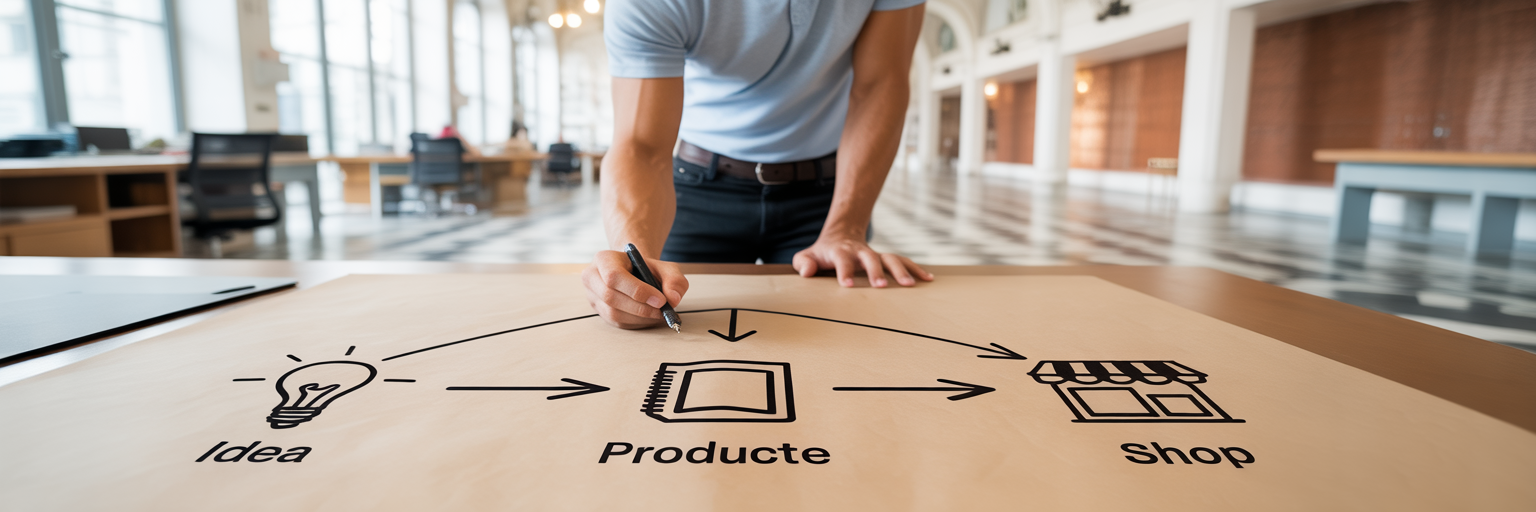
On the other hand, a digital products business focuses on creation. Think of Notion templates for organizing projects, Lightroom presets for photographers, or travel guides in PDF. The effort is concentrated on the initial development of the product. Once created, its distribution is automatic and its duplication has no cost. The opportunity to create a digital business allows experts and creatives to focus on what they do best, letting technology handle the rest. This distinction between digital vs physical products is the starting point for understanding where the true growth potential lies.
Cost Analysis: Initial Investment and Profit Margins
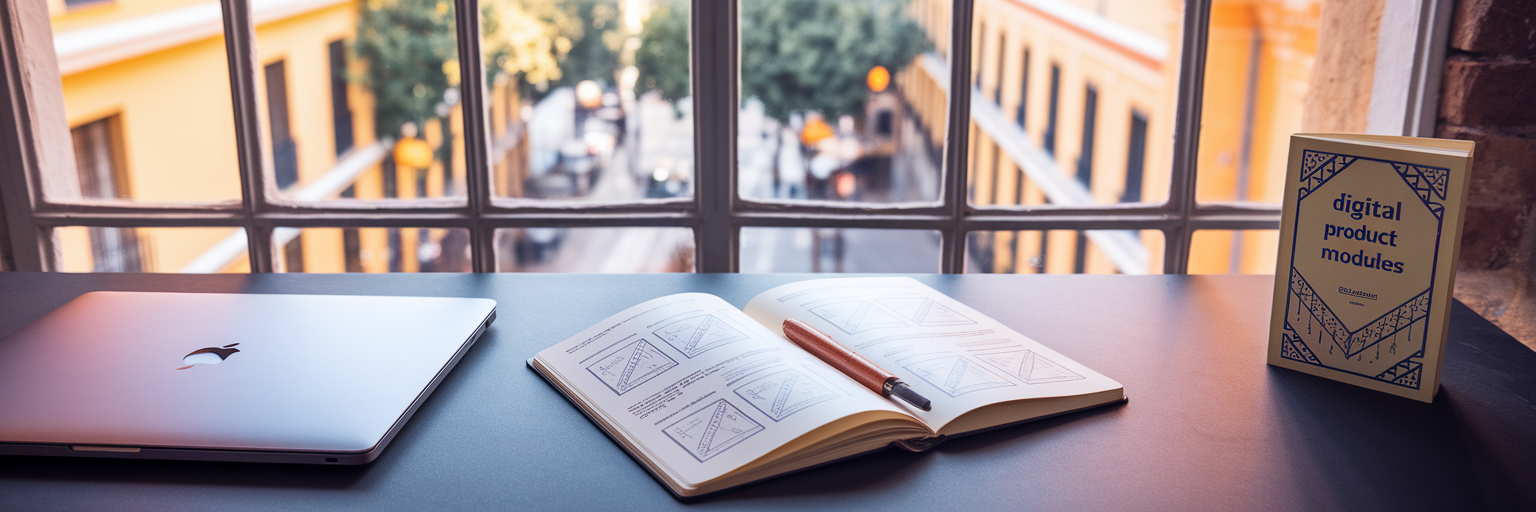
 Comparison of workspace for physical and digital products
When comparing business models, the finances speak for themselves. An entrepreneur selling physical products faces a list of direct and recurring costs. The initial investment to buy or manufacture stock is just the beginning. Added to this are storage costs, which often involve renting storage units to keep the merchandise. Each sale involves packaging and shipping costs, with carrier rates that erode the profit margin.
In contrast, an inventory-free online business based on digital products has a radically different cost structure. The main investment is not monetary, but of time and knowledge. The cost of creating an e-book, an online course, or a template pack is practically fixed. Once that product exists, the cost of selling an additional copy is almost zero. There's no production, no packaging, no shipping. This means that while the margins of a physical product are constantly pressured by variable costs, those of a digital product can approach 100% after amortizing the initial investment.
The initial effort to develop a digital asset is undoubtedly the most important step. If you're wondering where to start, you can find guidance in our guide on how to take your first steps with digital products. This approach dramatically minimizes financial risk. There's no danger of being stuck with unsold stock or products becoming obsolete.
| Key Factor | Physical Product Model | Digital Product Model |
|---|---|---|
| Initial Investment | High (stock purchase, materials) | Low (mainly time and software) |
| Cost per Sale | High (production, packaging, shipping) | Close to zero |
| Inventory Management | Costly and complex | Non-existent |
| Profit Margin | Limited by recurring costs | Very high, close to 100% per copy |
| Financial Risk | High (unsold stock, obsolescence) | Low (sunk cost in initial creation) |
Note: This table presents a structural comparison of business models. Exact values may vary, but the fundamental difference in cost structure and profitability remains.
The Logistics Revolution: Zero Inventory, Instant Delivery
Beyond costs, the operational difference between selling physical and digital products is vast. Managing a physical business involves a constant mental burden tied to logistics. You face returns management, a process that consumes time and resources. You have to deal with shipping incidents, such as lost or damaged packages, which generate frustration for both you and your customers. And above all, you live with the pressure of inventory control: knowing how much stock you have, when to replenish it, and how to prevent it from becoming obsolete.
Now, imagine a system where all of that disappears. That's the reality of digital products. The concept of "selling while you sleep" becomes literal. Your online store operates 24/7, processing orders and delivering products instantly and automatically to anywhere in the world. There's no manual intervention. A customer in Mexico can buy and download your guide at 3 in the morning while you sleep peacefully in Madrid. This automation frees up an immense amount of time and energy, which you can reinvest in activities that truly add value, like improving your products or connecting with your audience.
The advantages of digital products in terms of logistics are transformative. Tasks that consume most of a traditional entrepreneur's time are completely eliminated.
- Total elimination of stock management and the risk of obsolescence.
- Zero time spent on packaging and order preparation.
- No coordination with shipping companies and shipment tracking.
- Complete automation of the returns process and product access.
Scalability and Reach: A Business Without Borders
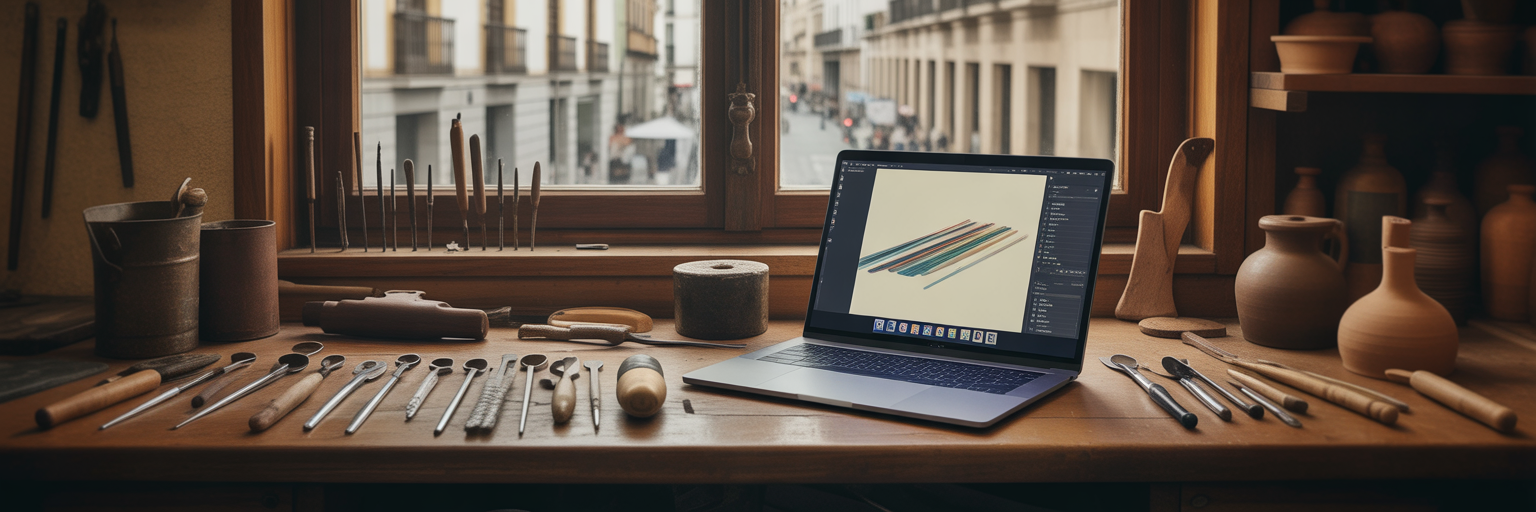
 Visual metaphor of digital business scalability
The true power of a digital business lies in its capacity for growth. Scalability in a physical products business is linear and risky. If you want to sell twice as much, you need to invest twice as much in stock, and you might need more storage space and more help to manage shipments. Each step of growth involves a new financial risk.
With digital products, scalability is exponential. The effort and cost of selling ten thousand copies of your e-book are exactly the same as selling ten. The system that delivers the product works the same for one customer as for thousands. This allows you to grow without increasing your operating costs. It's like the difference between building a single beautiful ship in a bottle, which requires artisanal and delicate work, and launching a fleet of paper airplanes that can reach any corner of the world with a simple push.
This global reach is one of the most powerful opportunities for creators. You can sell your knowledge to millions of people without worrying about the complexity of international shipping, customs, or different regulations. Your market is not your city or your country; it's the entire world from day one. To capitalize on this global audience, you'll need effective strategies, like those we explore in our Marketing section, which will help you connect with customers beyond your borders.
The Rise of the Digital Creator
This transition to digital is not a theory; it's a reality that's already happening. All over the world, professionals and creatives are turning their skills into income sources. We see the graphic designer selling social media templates, the fitness coach offering online training programs, or the business consultant sharing their experience through specialized e-books. They've all found a way to sell digital products online by packaging their knowledge in an accessible format.
The trend is backed by solid data. According to a Mastercard report cited by Tiendanube, the volume of digital product sales grew by almost 70% in the last two years. This demonstrates that the market not only exists but is in full expansion. The success of these creators is based on their ability to build a solid personal brand, a fundamental pillar that you can start developing by following the advice in our guide on how to build your creator brand.
The possibilities are enormous and span all kinds of niches:
- E-books and guides on specific topics (investment, productivity, vegan cooking).
- Online courses and recorded workshops (watercolor, digital marketing, yoga).
- Templates and assets for professionals (design, video, programming).
- Paid communities or subscriptions to exclusive content.
Your Next Step in Digital Commerce
The choice between a physical and digital model comes down to a fundamental question: where do you want to invest your energy? Digital products offer a path with lower financial risk, higher profit margins, and virtually unlimited scalability. They allow you to focus on creating value, instead of managing boxes and shipments.
The first step is to look inward. Evaluate your own skills and knowledge. What do you know how to do that others would want to learn? Once you have a clear idea, the next step is to find the right tool that allows you to sell it without complications. A platform like Crealo takes care of the sale, delivery, and payments so you only have to worry about creating.